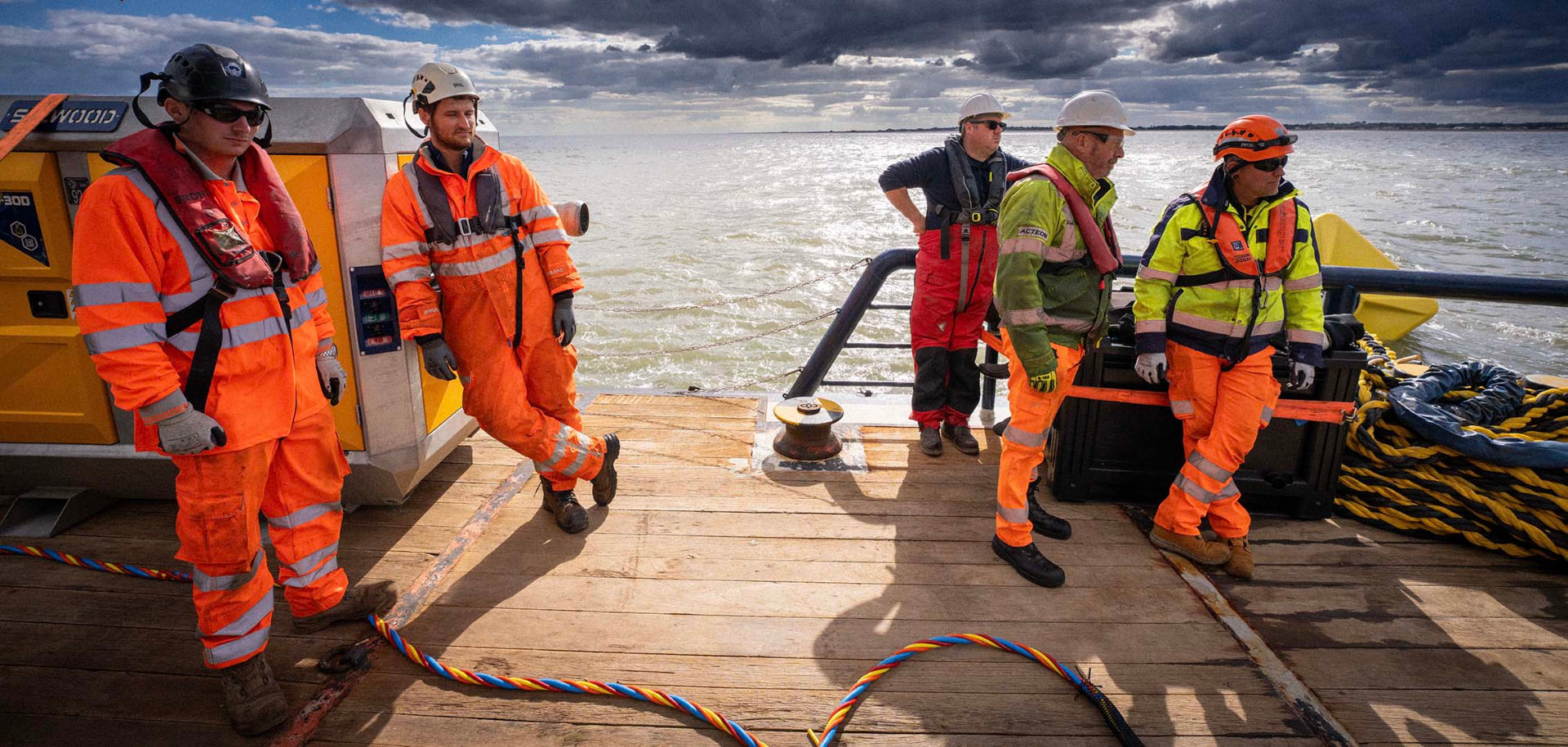
A few months after Bikini Atoll, I was on a work deck off Thorpeness, photographing Grimes Marine’s commercial divers at the landfall for ScottishPower Renewables’ East Anglia TWO windfarm. This is where two cable ducts, each just under 1,800 metres long, were pulled in under the seabed to bring the windfarm’s power ashore.
Document, don’t direct
Industrial PR photography has a familiar look: clean hi-vis, perfect light, a smiling line-up. It tells you a company exists, not what the work feels like.
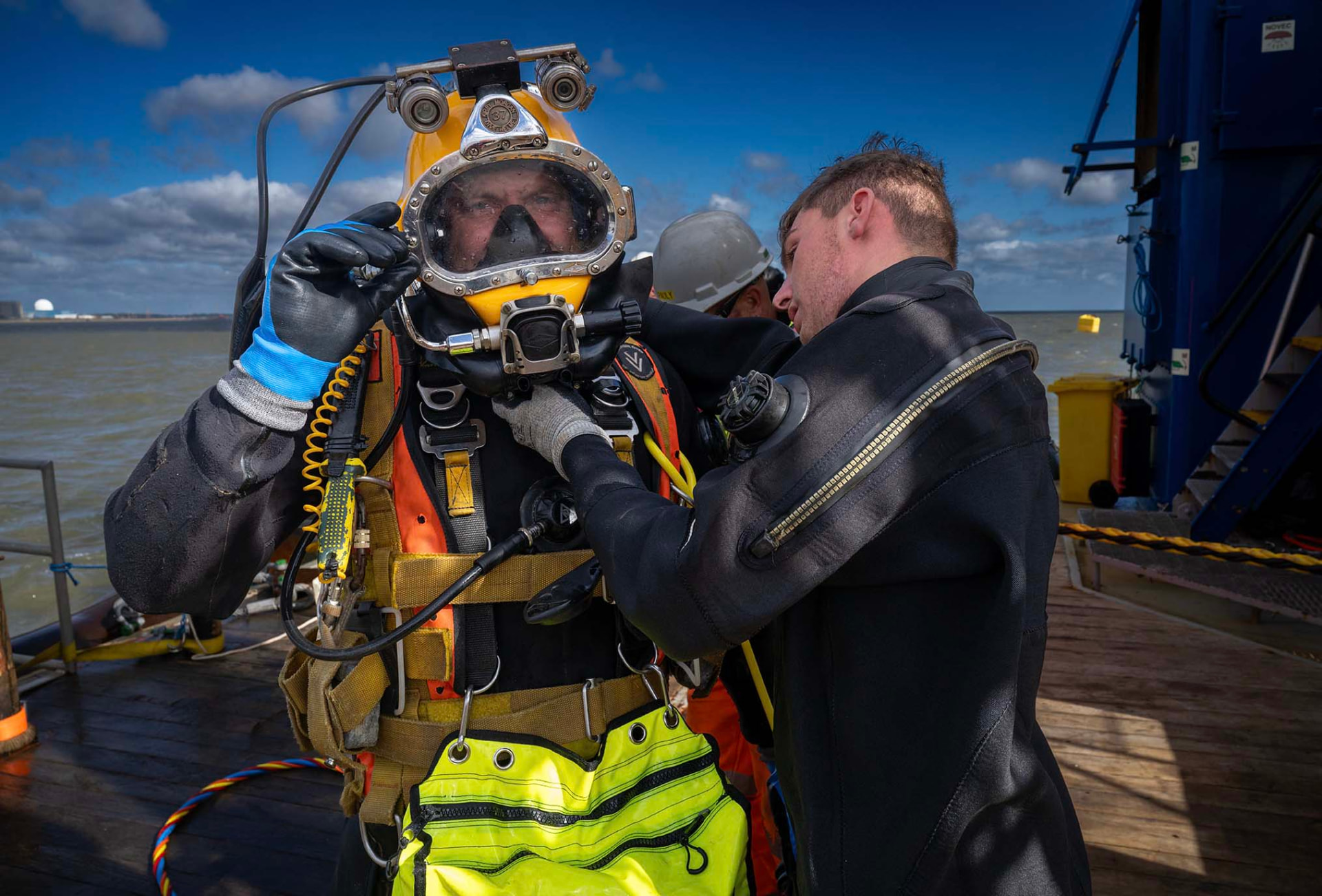
I shot this as a documentary. Nothing was staged. No one was asked to stand anywhere or do anything twice. Most of a dive day isn’t diving. It’s dressing, checking, waiting for the tide. That downtime is where the story is, and where you see the trust that holds the operation together.
Layers, not line-ups
My reference is street photography, especially Alex Webb, whose frames are built in layers with something happening in the front, middle and back. His pictures can look choreographed, but they’re moments he waited for. A busy deck lends itself to that: a tender leaning on the cabin, two crew mid-conversation, a third watching the water. Three moments, one frame.
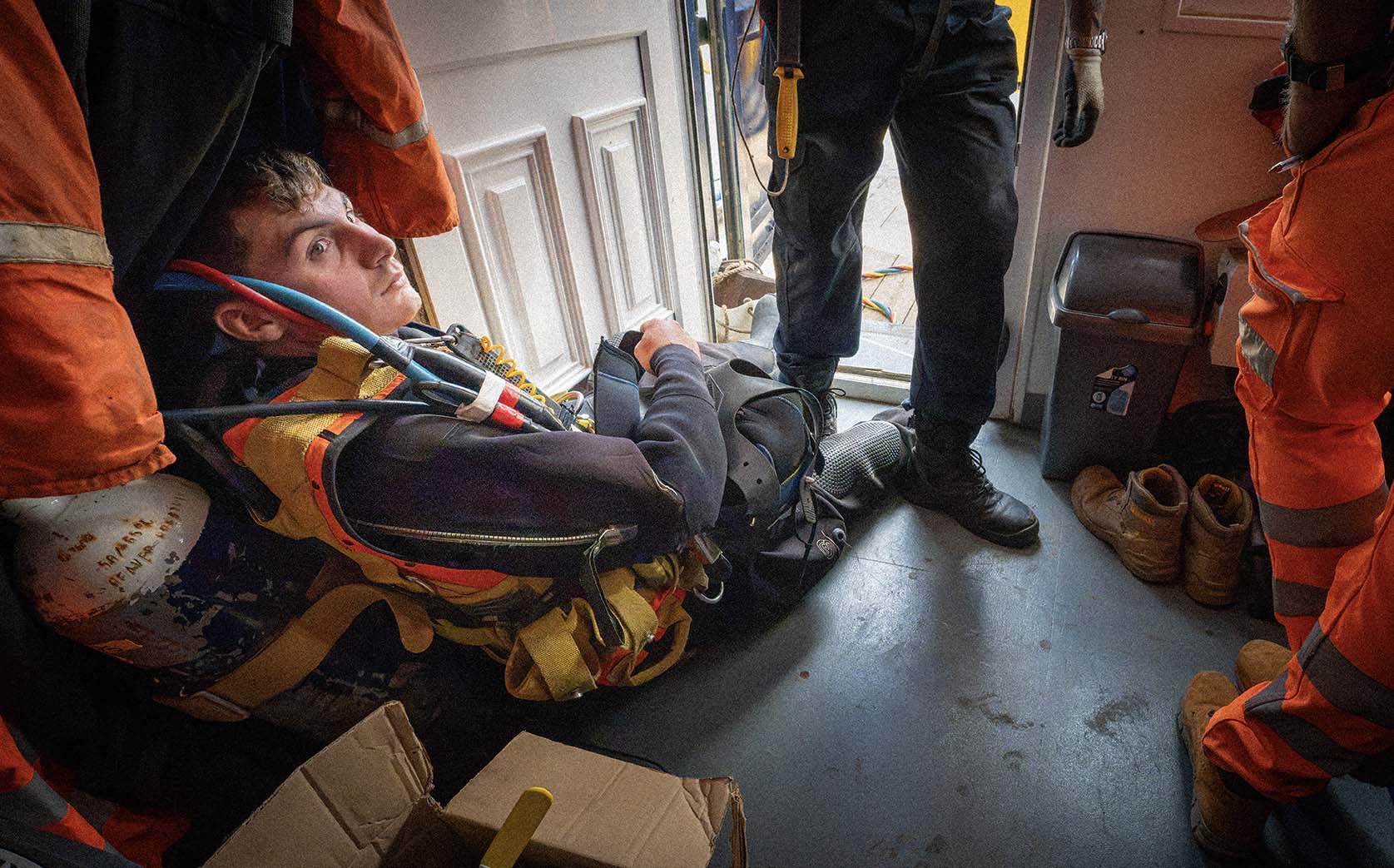
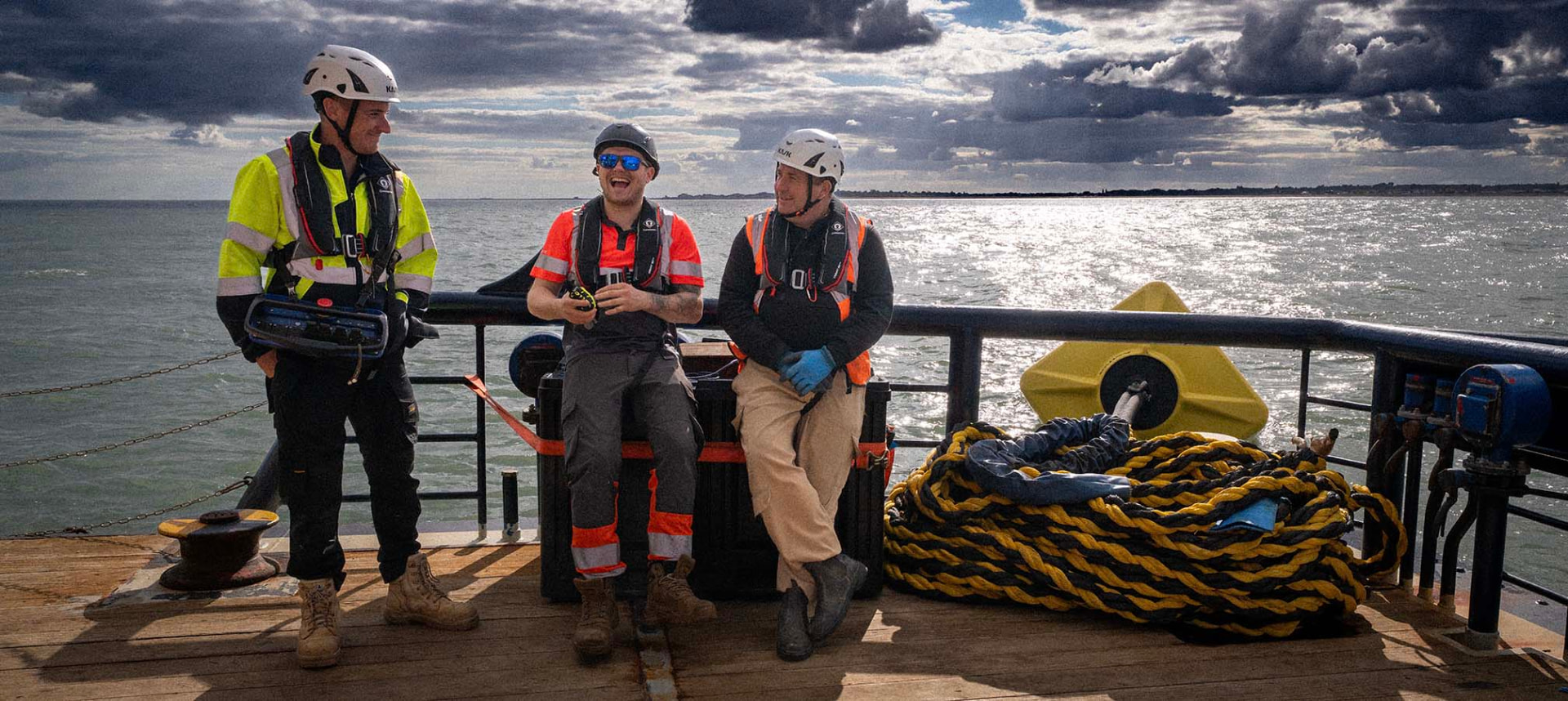
The pictures I value most are the in-between ones. A young diver in full kit sitting on the cabin floor among boots and bins. Crew laughing at the stern between dives. No one would think to stage these, which is why they work.
The moments are real. The grade is mine. I’ll shape how a picture looks, never what happened in it.
Why it matters now
Almost any image can now be generated. Slick is cheap, and audiences are learning to doubt anything glossy. For marine and offshore companies, the strongest thing you can show is proof: your real people, on your real job, doing the work.
In a world where anything is possible, the real thing is the differentiator.
Client: Grimes Marine. Location: East Anglia TWO landfall, off Thorpeness, Suffolk.